British Colonists Largely Objected to Which of the Following
Who were the hessians. Document declaring the American colonies to be free from British rule.

The Declaration Of Independence Ppt Download
British Policies Toward the American Colonies From Roughly 1763 to 1774.

. During which battle did the colonists show the british that the americans would not be easy to defeat. Social and political structures of the colonies and other pertinent factors. Type of people settling in the colonies.
What important fort did the ethan allen and the green mountain boys capture. The French and Indian war placed a financial burden on England. Enriched corrupt officials e.
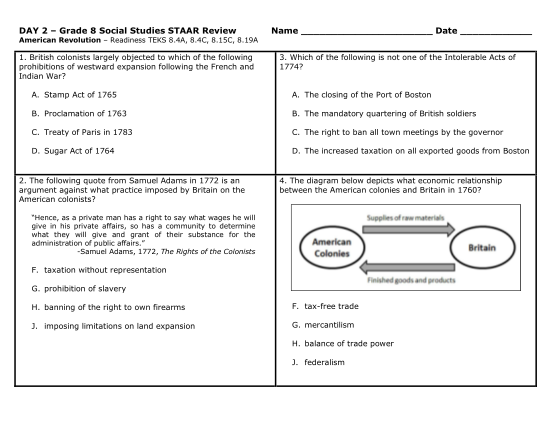
British colonists largely objected to which of the following prohibitions of westward expansion following the French and Indian War. Tap card to see definition. Disrupted trade with the West Indies c.
Stamp Act of 1765. Treaty of Paris in 1783. British colonists largely objected to which of the following prohibitions of westward expansion following the French and Indian War.
British colonists largely objected to which of the following prohibitions of westward expansion following the French and Indian War. British colonists largely objected to which of the following prohibitions of westward expansion following the French and Indian War. Which of the following is not one of the Intolerable Acts of 1774.
The principle of separation of powers assumes that the judiciary is the least dangerous branch. Treaty of Paris in 1783 D. Wanted to be able to trade freely with foreign nations.
Sugar Act of 1764 3. American colonists thought this was unfair because they felt they were being taxed without representation this is called Taxation without Representation. The closing of the Port of Boston B.
4 Reasons Colonists Rebelled Against Britain Besides High Taxes Americans today tend to look at the War of Independence in terms of patriotic slogans. Occurrence of civil disobedience in protest to British taxation. Britain was attempting to both balance its finances and control the newly acquired parts.
29 Questions Show answers. Feared it would provoke attacks from American Indians. British colonists largely objected to which of the following prohibitions of westward expansion following the French and Indian War.
Colonial history British legislation aimed at ending the smuggling trade in sugar and molasses from the French and Dutch West Indies and. Treaty of Paris in 1783 D. British colonist objected to the proclamation of 1763 because they ___________.
I regret that I have but one life to give for. Boston Harbor was closed until the cost of the tea would be paid colonist were forced to house soldiers and the Boston government was. Plantation Act Sugar Act also called Plantation Act or Revenue Act 1764 in US.
But in the seeds of Britains great victory lay the beginnings of the American Revolution since Parliament now turned to the. Stamp Act of 1765. Preview this quiz on Quizizz.
Answer 1 of 6. Battle of bunker hill. Final battle of the Revolutionary War that resulted in British surrender.
The origins of these attempts lay however not in a rapacious government but in the aftermath of the Seven Years War. British colonists largely objected to which of the following. 8th - 10th grade.
Stamp Act of 1765. Relations with Native Americans. When was the declaration of independence signed.
Prohibitions of westward expansion following the French and. In order to pay off debt from the war England imposed taxes on the Americans. Resented the limits it imposed on westward expansion.
Taxed them without their consent. Why did many colonists come to believe so strongly in self-government. A Stamp Act of 1765.
No Taxation without Representation. Sugar Act of 1764 A. Which of the following is not one of the Intolerable Acts of 1774.
Closed the colonial courts d. Provoked by British after Parliament imposed new taxes and restrictive regulations-the belief that Americans should not have to pay taxes to the British if not properly represented by the British government-major cause of revolutionary war-belief that colonial representatives should only have the ability to levy taxes. British colonists in North America objected to the Stamp-Act primarily because it.
Did not want control of the fur trade with France. Also discuss the histories of one of the following colonies to provide further evidence. They were even known to have traded with the French during the recently ended war.
British colonist objected to the proclamation of 1763 because they _____. STAAR Review-American Revolution DRAFT. The closing of the Port of Boston B.
Five colonists were killed and the patriots used it as an opportunity for anti-British propoganda Intolerable Acts Punishment established as a result of the Boston Tea Party. To be sure laws regulating imperial trade and navigation had been on the books for generations but American colonists were notorious for evading these regulations. Click card to see definition.
First battle of the American Revolution resulting in a small colonial victory. Proclamation of 1763 C. Hence as a private man has a right to say what wages he.
Sugar Act of 1764. Conflict that left Britain with a huge debt and desire to avoid future conflict. British colonists largely objected to which of the following prohibitions of westward expansion following the French and Indian War.
The following quote from Samuel Adams in 1772 is an argument against what practice imposed by Britain on the American colonists. The Seven Years War ended in 1763 with Great Britain the undisputed winner gaining control over French territory in North America and India. Stamp Act of 1765 B.
Stamp Act of 1765 B. Treaty of Paris in 1783. Relations with Native Americans.
Up to 24 cash back 1. Consider the following factors. Shays Rebellion was the first battle of the Revolutionary War.
South Carolina Pennsylvania or New York. Which of the following is not one of the Intolerable Acts of 1774. The closing of the Port of Boston B.
Proclamation of 1763 C. British colonists largely objected to which of the following prohibitions of westward expansion following the French and Indian War. Threatened the free press b.
The attempts by Britain to tax its North American colonists in the late 1700s led to arguments war the expulsion of British rule and the creation of a new nation. Following the French and Indian War the British government and the colonists agreed that westward expansion and settlement should be curtailed. British leaders also felt the need to tighten control over their empire.
British colonists largely objected to which of the following prohibitions of westward expansion following the French and Indian War.
American Revolution Staar Review Pdf Day 2 Grade 8 Social Studies Staar Review Name Date American Revolution Readiness Teks 8 4a 8 4c 8 15c Course Hero
51 Salary History Sample Template Free To Edit Download Print Cocodoc

Please Answer The Question In The Photo Brainly Com


Comments
Post a Comment